How Women’s Rights Movements Are Ending FGM/C in Kenya
Nashipai was enjoying a peaceful evening at home during the December holidays, happy, content, and unaware of the ordeal that awaited her. Knowing how vocal her mother was against FGM/C, she had no sense of worry or doubt that she would fall victim to a practice that had ruined so many lives.
Suddenly, she heard her father arguing with some women outside. Curious, she stepped out to inquire, only to be forcibly grabbed and led away. The women told her she was being taken to a sacred place where she would transition from a girl to a woman and receive tremendous blessings from her ancestors, but Nashipai knew what that meant.
Knowing the harmful effects of Female Genital Mutilation/Cutting (FGM/C), she wept and begged for mercy, but the women would not let her go. Realizing that pleading was futile, Nashipai waited for the right moment. When an opportunity arose, she bolted, running as fast as her legs could carry her. She did not stop until she got to the house of a local FGM champion. He took up the matter, ensuring she did not go through the retrogressive rite. Unlike Nashipai, many girls are not as fortunate.
Understanding FGM/C
FGM/C involves the partial or total removal of external female genitalia for non-medical reasons. The World Health Organization (WHO) estimates that over 230 million girls and women have undergone FGM/C in Africa, the Middle East, and Asia. Once seen as a rite of passage, it is now recognized as a severe human rights violation with devastating health consequences and no benefits.
Despite significant progress in reducing FGM/C through government intervention and collaboration among NGOs, CSOs, and CBOs, the practice persists in certain regions. Worse still, perpetrators are evolving, with the increasing medicalization of FGM/C posing new challenges to eradication efforts.
Women’s Rights Movements in the Fight Against FGM/C
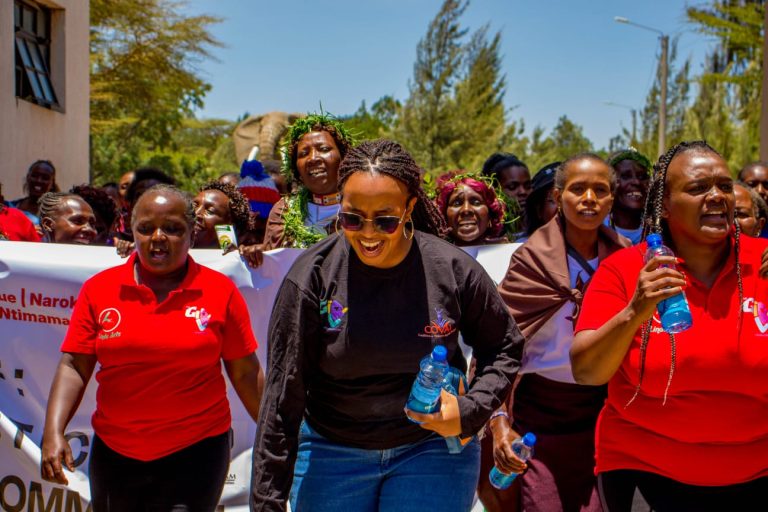
We sat down with Ivy Kwamboka, a program officer at the Coalition on Violence Against Women (COVAW), who is currently implementing a project aimed at reducing FGM/C in Narok County, Kenya. This initiative is part of The Girl Generation – African Led Movement to End FGM/C Programme (TGG-ALM), which is funded by Options UK. COVAW has been sub-granted by Options UK to serve as the anchor grantee for the implementation of the TGG-ALM programme in Narok County.
Consequently, COVAW is implementing the Ailepu (meaning “Arise” in the Maa language) project in Suswa Ward, Narok East Sub-County. The project focuses on reducing FGM/C by shifting social attitudes and fostering community-driven change. It prioritizes continuous learning and adaptation, with a focus on community-led initiatives that ensure sustainability.
COVAW is implementing Ailepu in 13 villages: Oloshaiki, Inkoinierito, Inkilongosi, Oltepesi, Kipise, Enariboo, Olepolos, Sintakara, Nkampaani, Orngoswa, Enkiloriti, Enaropa O’ngila, and Olasiti. The goal is to significantly reduce the practice of FGM/C and promote positive changes in community attitudes toward this harmful practice.
1. Can you describe the role of women’s rights movements in the fight against FGM/C?
Women’s rights movements are the engine of change in the fight against FGM/C. They’ve shifted the narrative, transforming FGM/C from a “cultural practice” to a recognized human rights violation, a violation of bodily autonomy and dignity. They are the voice of survivors, the force behind policy change, and the mobilizers of communities. From grassroots activism to international lobbying, they’ve driven awareness, changed behavior, and pushed for stronger legal frameworks.
2. In what ways does strengthening networks at the county, national, and regional levels enhance the effectiveness of these movements in ending FGM/C?
Building strong networks at different levels ensures a coordinated multi-sectoral approach to ending FGM/C, allowing for coordinated advocacy, resource-sharing, and policy enforcement. At the county level, grassroots organizations drive community engagement and awareness, targeting communities directly. At the national level, legislative advocacy efforts push for policy changes and law enforcement. Regionally, cross-border collaborations address cross-border FGM/C cases. Strengthening these networks fosters knowledge-sharing, capacity-building, and better resource allocation. A well-connected network ensures best practices are shared, enhances the reach of campaigns, and provides a united front against FGM/C.
3. What strategies are being used to unite stakeholders in this fight?
We use a multi-pronged approach, which entails:
- Policy dialogues with government institutions to push for legislative enforcement.
- Community-led alternative rites of passage (ARPs) offer non-harmful cultural alternatives.
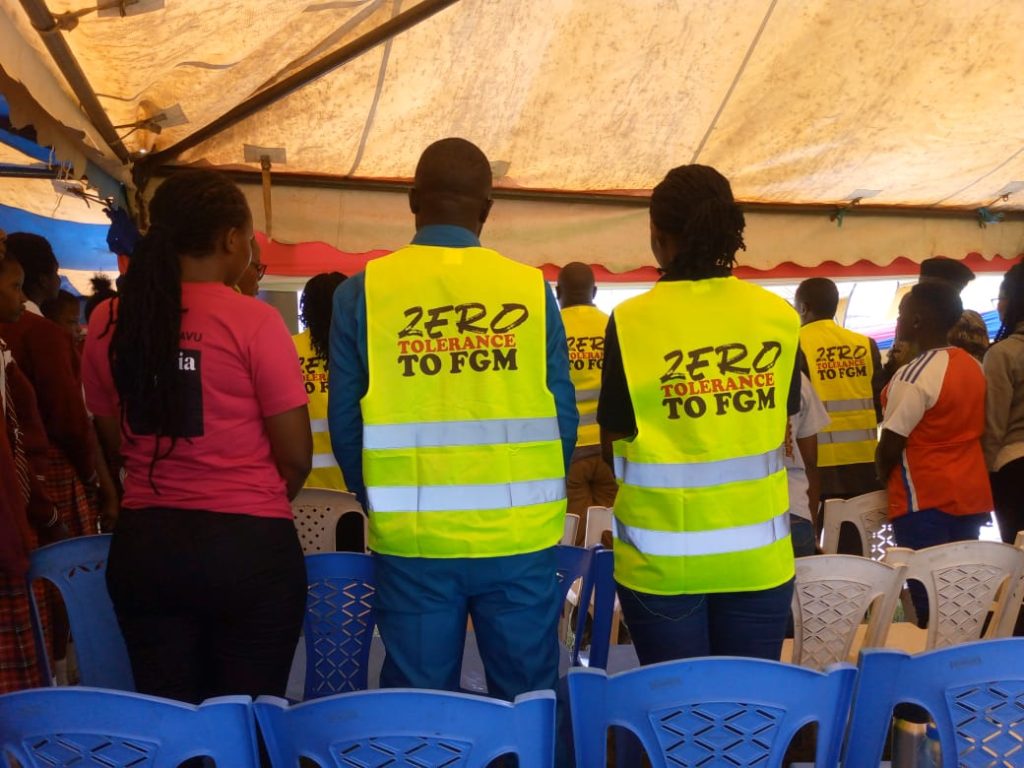
- Community engagement through dialogue forums with elders, religious leaders, and community-based organizations (CBOs).
- Training programs for law enforcement, healthcare workers, and educators on FGM/C-related policies. Capacity-building programs for grassroots activists and organizations.
- Empowering survivors to become advocates through storytelling and legal empowerment.
- Multi-stakeholder forums to facilitate dialogue and coordination.
- Public awareness campaigns to shift societal attitudes.
4. How do women’s rights organizations collaborate across different levels (county, national, regional) to ensure a unified approach to ending FGM/C? Can you share an example of a successful collaboration and its impact on the community?
Women’s rights organizations collaborate across different levels through County-based anti-FGM/C networks that engage grassroots communities through joint campaigns and information-sharing platforms, national coalitions like the Kenya Anti-FGM Board that coordinate policy advocacy and implementation, and regional alliances that address cross-border FGM/C challenges.
A good example is when COVAW partnered with AMREF and UNICEF to implement the Alternative Rites of Passage (ARP) program, which provides a cultural yet safe transition to adulthood without undergoing FGM/C. Additionally, the Anti-FGM Board has worked with grassroots women’s organizations to enforce the Prohibition of FGM Act. These efforts have contributed to a decline in FGM/C prevalence in regions like Narok and West Pokot.
5. How are regional partnerships enhancing the effectiveness of anti-FGM/C efforts, particularly in cross-border cases? Share some examples of successful cross-border partnerships and their impact on local communities.
Regional partnerships have helped track and prevent FGM/C cases in border communities where girls are taken to neighboring countries for the procedure. Successful collaborations include:
- The UNFPA-UNICEF Joint Programme facilitates agreements between governments, civil society, and law enforcement.
- Cross-border rescue centers in areas like Kuria (Kenya) and Tarime (Tanzania) provide refuge to at-risk girls.
6. What challenges do these networks face, and how are they being addressed?
Some of the main challenges we face include:
Resistance from cultural and religious leaders who perceive FGM/C as a tradition. We address this through community dialogues to shift social norms and adopt alternative rites of passage. There is also the issue of Weak law enforcement and corruption, allowing practitioners to continue FGM/C underground. This can be mitigating through by by advocating for stricter implementation of anti-FGM laws. Limited funding for community outreach programs also presents a challenge. This can be overcome by building strategic partnerships and engaging donors. Cross-border complexities can be tackled through harmonized legal frameworks between countries.
7. How has survivor-led advocacy influenced the movement against FGM/C and strengthened women’s rights networks in the fight?
Survivors bring authenticity and urgency to the movement, making advocacy efforts more impactful. Programs like ‘The Brave Girls’ by COVAW, where survivors lead awareness campaigns, have helped change mindsets and encouraged more young girls to resist FGM/C. Moreover, survivors serve as role models for at-risk girls and act as ambassadors in their communities. Their testimonies have increased prosecution of perpetrators, influenced policy changes, such as mandatory reporting of FGM/C cases in Kenya and encouraged families to abandon FGM/C in favour of alternative rites of passage.
8. What policy changes have resulted from collective advocacy, and what gaps remain?
Some of the achievements made include, the enactment of the Prohibition of Female Genital Mutilation Act (2011) criminalized FGM/C in Kenya, the establishment of the Anti-FGM Board to monitor and coordinate anti-FGM/C efforts, the inclusion of FGM/C issues in the Children’s Act and Sexual Offenses Act and cross-border agreements between Kenya and Uganda to prevent cross-border FGM/C.
That said, there still exist several gaps threatening the eradication of FGM/C. For instance, there is the issue of weak enforcement of anti-FGM/C laws in rural communities, a lack of safe houses for girls escaping FGM/C, insufficient data collection, as well as limited protection for whistleblowers and survivors.
9. What role do men and boys play in strengthening anti-FGM/C networks, and how can they be better engaged?
Men and boys are crucial allies in dismantling gender norms that perpetuate FGM/C. Initiatives like Men End FGM encourage male champions to reject the practice. More involvement in community dialogues, schools, and religious forums is needed to strengthen their role. At COVAW, we actively involve men in our anti-FGM advocacy. We run male engagement programs where elders and young men champion anti-FGM messages in Maasai and Samburu communities.
10. How do social media and digital campaigns contribute to the movement?
Digital activism has amplified awareness, reaching wider audiences. For instance, the #EndFGM campaign, supported by COVAW and UNFPA, has reached a large target audience through online advocacy, leading to more community dialogues and law enforcement interventions. #EndFGM and #RightToSayNo social media movements, which mobilize global advocacy.
11. What future strategies are needed to expand and sustain anti-FGM/C networks?
To strengthen the movement against FGM/C, we need:
- More funding for grassroots organizations to scale up anti-FGM interventions.
- Stronger partnerships with traditional leaders and religious institutions.
- Expansion of Alternative Rites of Passage (ARP) programs to all high-prevalence areas.
- Stronger cross-border collaborations to tackle regional FGM/C challenges.
- Integration of anti-FGM/C messages into school curricula to educate the next generation.
- Enhanced digital advocacy and e-learning tools for awareness.
- Scaling up survivor-led interventions.
- Strengthening policy implementation and monitoring mechanisms.
- Regional treaties and cross-border legal harmonization.