Publications & Resources
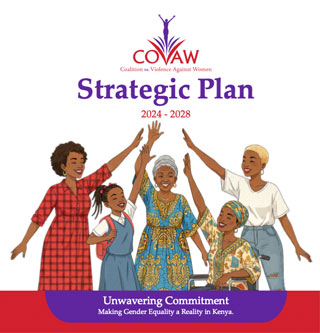
Strategic Plan 2024 – 2028
Published: 2025As we unveil COVAW’s 2024-2028 Strategic Plan, it is imperative to acknowledge the challenges faced by women and girls in Kenya. Sexual and gender-based violence, systemic inequalities, and cultural conservatism persist, demanding bold and transformative action. Our work is grounded in key national and international frameworks that have shaped our approach. These include the Constitution of Kenya (2010), which provides a framework for addressing gender equality in the country as well as the Sustainable Development Goal 5, which promotes gender equality. Additionally, our efforts align with national gender priorities and relevant international and regional instruments on women’s rights, ensuring our strategy is comprehensive and rooted in global commitments to women’s empowerment.
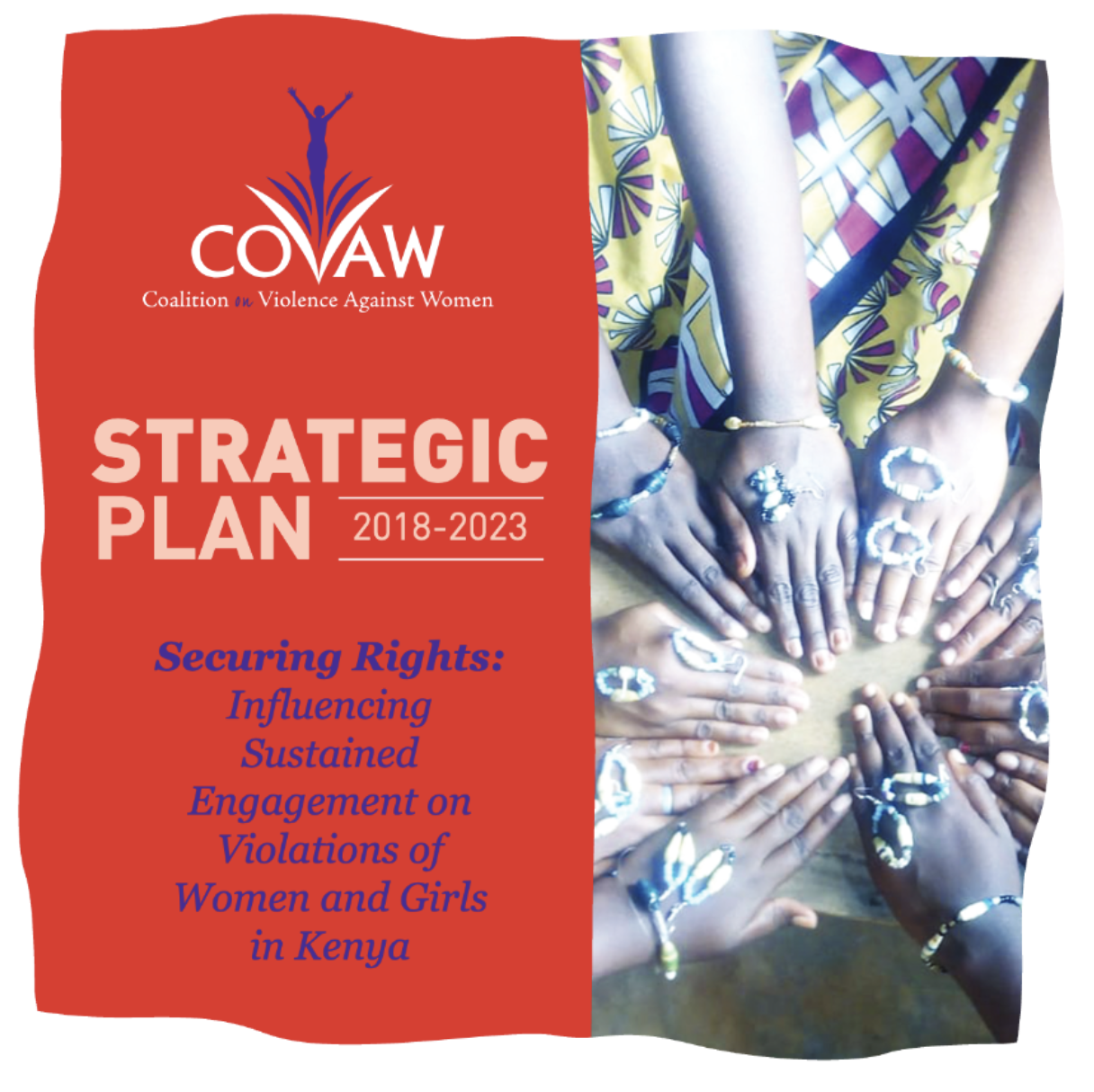
Strategic Plan 2018 – 2023
Published: 2018The Coalition on Violence Against Women (COVAW) understands that women’s freedom from all forms of discrimination and Violence Against Women And Girls (VAWG) is not only a human right, but also crucial to enabling sustainable development. We believe that people can learn and change their attitudes towards women and girls, and that all such forms of gender violence can be prevented. Building on our previous work, this Strategic

Addressing Legal and Healthcare Challenges Arising from Kenya’s Reservations under Article 14(2)(c) of the Maputo Protocol
Published: 2024This comprehensive policy brief addresses the impact of Kenyan government reservations under Article 14(2)(c) of the Maputo Protocol on women’s reproductive rights and access to safe abortion services. Motivated by concerns regarding alignment with domestic laws, particularly Article 26(4) of the Kenyan Constitution, these reservations have given rise to multifaceted legal and practical challenges. This brief proposes a set of targeted recommendations to deal with these challenges and uphold women’s reproductive autonomy, including the pivotal recommendation of lifting the existing reservation, alongside a specific focus on implementing existing health policies.
National CSO Action Plan supporting sexual and reproductive(SRH&RR) in realization of the Maputo Protocol
Published: 2024The realization of the sexual and reproductive health and reproductive rights (SRH &RR) of womenandgirls in Kenya, continues to be challenged owing to a legal and policy framework at national level containing several laws that are not aligned to each other. Additionally, this framework does not reflectthe normative standards to which Kenya has committed itself through the ratification of binding regional and international instruments on the rights of women and girls.
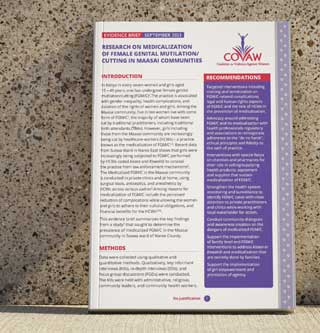
Research on medicalization of female genital mutilation/cutting in Masaai communities.
Published: 2023In Kenya in every seven women and girls aged 15 – 49 years, one has undergone female genital mutilation/cutting (FGM/C)1. The practice is associated with gender inequality, health complications, and violation of the rights of women and girls. Among the Maasai community, five in ten women live with some form of FGM/C1, the majority of whom have been cut by traditional practitioners, including traditional birth attendants (TBAs).
DELAYED. DENIED. Legal and Administrative Bottlenecks to Effective and Efficient Delivery of Justice for Survivors of SGBV in Kenya
Published: 2023Kenya has a robust national legal and policy framework to prevent and combat Sexual and Gender-Based Violence (SGBV). The Bill of Rights affords progressive constitutional safeguards that guarantee the right to access to justice, right to fair administrative action (including judicial processes); right to equal protection and equal benefit before the law, right to dignity and the right to a fair hearing. The Constitution also secures the rights of vulnerable groups including children and persons with disabilities. Every state organ is obliged to put in place measures to ensure the full enjoyment of the rights. Furthermore, there is in place various laws and policies that secure the rights of victims of sexual violence. The judiciary also has in place judicial guidelines that relate to case management.

SAFELY ENGAGED: Addressing gender-based violence and economic exclusion of girls and young women in Kenya.
Published: 2023The Girls Advocacy Alliance (GAA) programme is a lobby and advocacy programme jointly supported by three Netherlands based organisations, namely Plan Netherlands, Terre des Hommes Netherlands (TdH-NL) and Defence for Children-ECPAT with funding from and in partnership with the Ministry of Foreign Affairs of the Netherlands Government (Dialogue and Dissent – Strategic Partnerships framework). The programme aims at ending gender-based violence and improving economic empowerment of girls and young women in 10 Asian and African countries. In East Africa, three countries namely Kenya, Uganda and Ethiopia are participating in the programme, with the aim of engaging Africa regional bodies such as the African Union (AU) and East African Community (EAC).
Gender Responsive budgeting as a tool for change in Kwale County
Published: 2023Gender Responsive Budgeting(GRB) is a tool used to bridge gender equality and eliminate violence against women and girls in resource allocation and distribution. GRB aims at reducing inequalities, ensures budgets reflect needs of every gender and breaks down generational barriers faced by women in social, economic and political pillars. In GRB, citizens are both beneficiaries and agents of the process.

The Right to Choose
Published: 2023The Coalition on Violence Against Women (COVAW) understands that women’s freedom from all forms of discrimination and Violence Against Women and Girls (VAWG) is not only a human right, but also crucial in enabling sustainable development and freedom from Gender Based Violence (GBV). Women’s economic empowerment is one of the 5 strategic focus areas of COVAW. Willing to deepen its understanding of tenets of the economic exclusion of the most marginalized women, COVAW in partnership with the Humanity & Inclusion Making It Work project implemented a 6 months project : “Analysing the Economic Exclusion of Women involved in the Business Sector in Informal Settlements of Nairobi County, using an Intersectional Approach”.
Intersectional Assessment of the Economic Exclusion of Women Involved in the Business Sector in Informal Settlements of Nairobi County, Kenya
Published: 2023The Coalition on Violence Against Women (COVAW) understands that women’s freedom from all forms of discrimination and Violence Against Women and Girls (VAWG) is not only a human right, but also crucial in enabling sustainable development and freedom from Gender Based Violence (GBV). Women’s economic empowerment is one of the 5 strategic focus areas of COVAW. Willing to deepen its understanding of tenets of the economic exclusion of the most marginalized women, COVAW in partnership with the Humanity & Inclusion Making It Work project implemented a 6 months project : “Analysing the Economic Exclusion of Women involved in the Business Sector in Informal Settlements of Nairobi County, using an Intersectional Approach”
NO JUSTIFICATION : Medicalization of Female Genital Mutilation in Maasai Communities.
Published: 2023Female genital mutilation/cutting (FGM/C) has persisted despite its impact on human rights, gender equality and health of women and girls in the world. Interventions for addressing FGM/C in Kenya have continued to bear fruit with the national prevalence as of 2022 reported at 15%.
Annual report 2021: Empowering Women and Girls during times of crisis
Published: 2021It is with great pleasure that we present the COVAW 2021 Annual Report. 2021 was yet another challenging year, marked by increased cases of Sexual and Gender Based Violence and continued effects of COVID-19 pandemic – all compounding factors to vulnerability. This annual report provides a glimpse of our efforts to serve vulnerable women and girls exposed to or at risk of gender based violence.
Sexual and Gender Based Violence and Justice for Intellectually Challenged Women and Girls in Kenya
Published: 2020Intellectual disabilities as neurodevelopmental disorders that begin in childhood and are characterized by intellectual difficulties as well as difficulties in conceptual, social, and practical areas of living. The onset of these deficits starts during childhood.
Paralegals Training Manual on Sexual & Gender-Based Violence
Published: 2025Locally and across the globe, Governmental Agencies, Development Agencies, and Local Civil Society Organizations are working to end sexual and gender-based violence. It is in the pursuit of that goal that hundreds of Professionals and Agencies have developed an extensive collection of resources on the issue. These persons have identified innovative and forward-thinking solutions to end sexual and gender-based violence on women and girls. The development of this Manual relied on the knowledge, experiences, and activities contained within these resources.
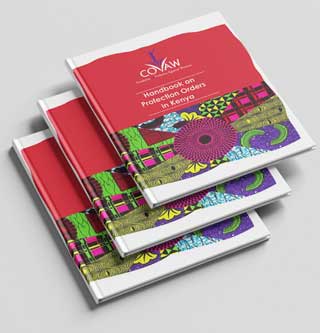
Handbook on Protection Orders in Kenya
Published: 2023Violence against women and girls is a human rights violation. According to UN Women, one in three women worldwide experience physical or sexual violence mostly by an intimate partner. In the last one year, more than 243 million women have experienced a form of physical or sexual violence. Since the outbreak of COVID-19, emerging data, and reports from around the globe, have shown that domestic violence, has intensified. Kenya has followed this trend. According to reports sourced from investigative agencies, a third of crimes reported since the COVID19 onset involved sexual violence (NCAJ Report, 2020).

Kijitabu Kuhusu Maagizo ya Ulinzi Kenya
Published: 2023Kijitabu hiki kimekusudiwa kuwa mwongozo rahisi juu ya sheria ya unyanyasaji wa majumbani na utaratibu wa kuomba agizo la ulinzi katika mahakama yoyote ya Hakimu Mkazi nchini Kenya. Unaweza kutafuta ulinzi ikiwa una wasiwasi juu ya usalama wako kwa sababu unanyanyaswa kimwili, kuwindwa kwa mtu, kudhulumiwa, unyanyasaji wa kijinsia, au kutishiwa na mtu ambaye una uhusiano wa nyumbani naye, uhusiano wa karibu au mtu ambaye hahusiani na wewe sana.

Pro Bono Lawyers Training Guide on Sexual and Gender-Based Violence.
Published: 2020Due to the existing gap in the provision of legal services, the development of the Pro bono Lawyers Training Guide was initiated by COVAW to support the capacity enhancement of the lawyers in addressing the gaps under the project Enhancing Access to Justice for Sexual and Gender-Based Violence Victims with Intellectual Disabilities supported by the African Women’s Development Fund (“AWDF”)