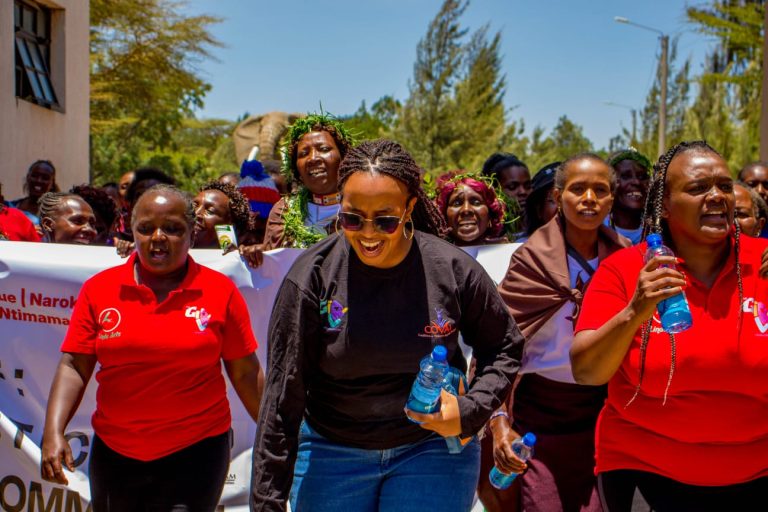
How Women’s Rights Movements Are Ending FGM/C in Kenya
Posted on: Wed, May 21, 2025 | 1:28 pmNashipai was enjoying a peaceful evening at home during the December holidays, happy, content, and unaware of the ordeal that awaited her. Knowing how vocal her mother was against FGM/C, she had no sense of worry or doubt that she would fall victim to a practice that had ruined so many lives.
Read More
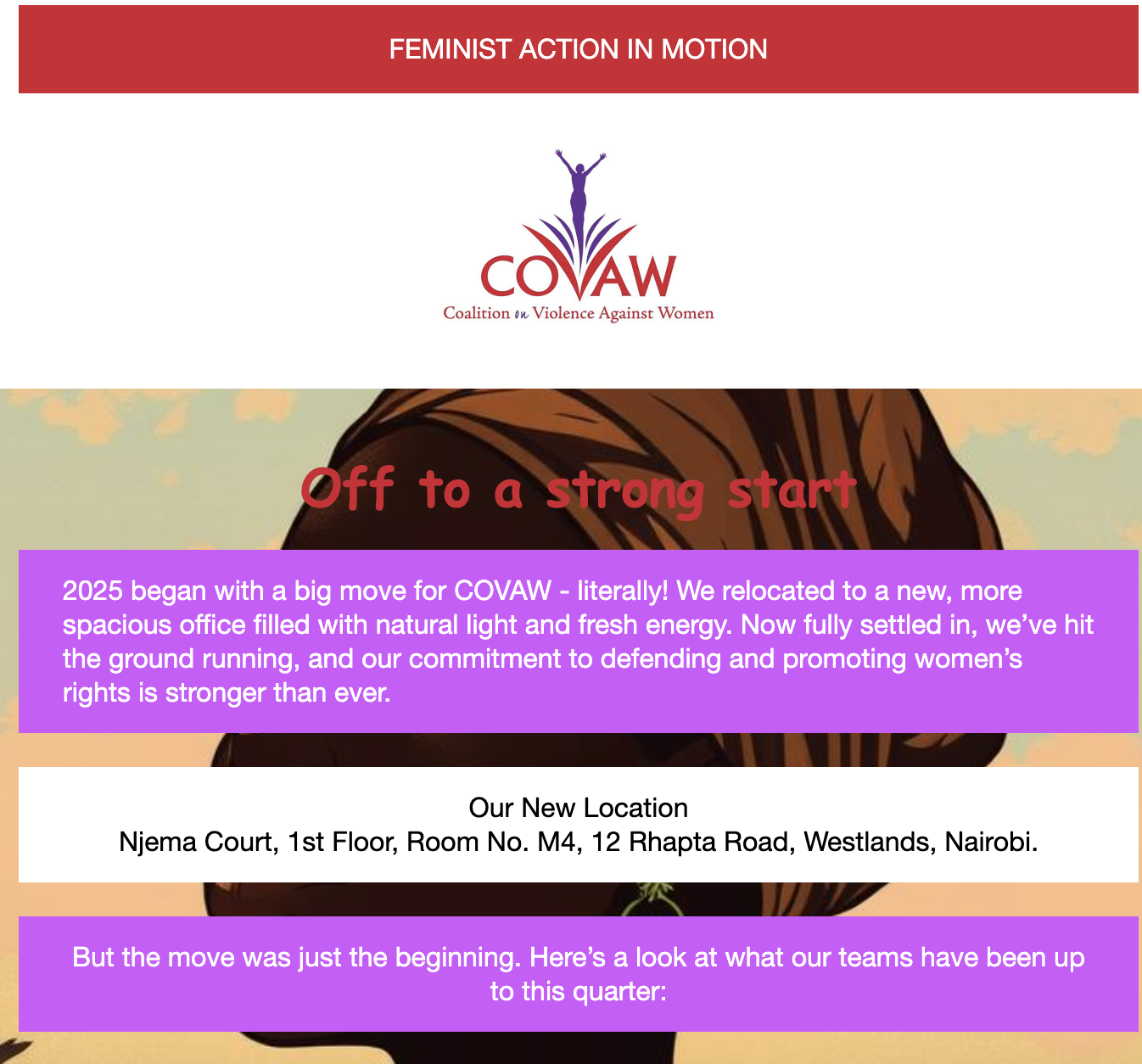
Feminist Action in Motion – COVAW in 2025
Posted on: Fri, May 2, 2025 | 12:12 amIn Kenya, as in many African countries, childcare work is often undervalued—seen as a last resort rather than a viable career. COVAW is set to change that. This quarter, COVAW and WUSC officially launched the Action for Paid Childcare Sector Transformation Project (ACT), a four-year project supported by Global Affairs Canada, to elevate childcare from a fallback job to a respected vocation for women in Kenya and Malawi.
Read More
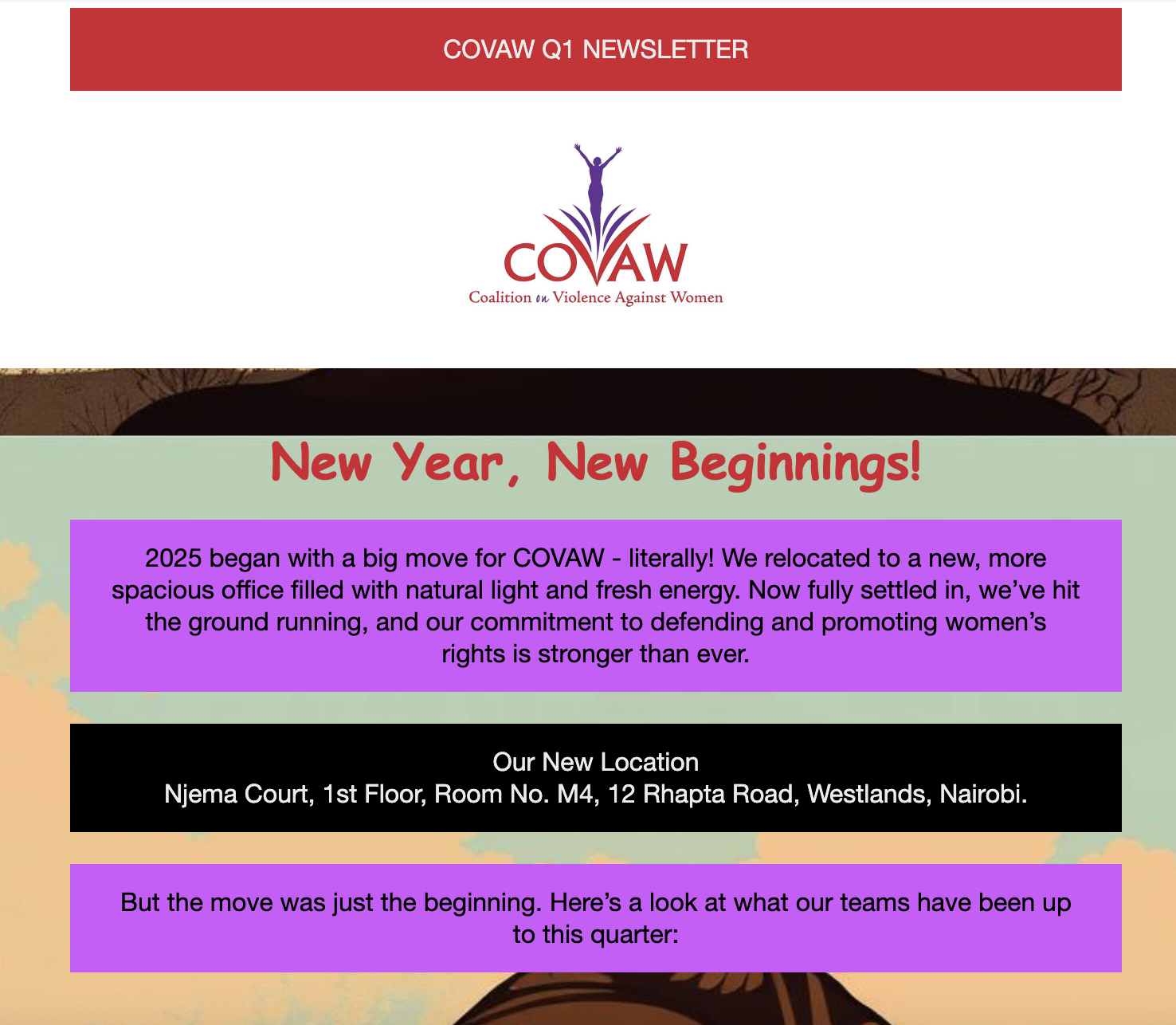
COVAW Q1 NEWSLETTER
Posted on: Tue, Apr 29, 2025 | 12:15 am2025 began with a big move for COVAW – literally! We relocated to a new, more spacious office filled with natural light and fresh energy. Now fully settled in, we’ve hit the ground running, and our commitment to defending and promoting women’s rights is stronger than ever.
Read More
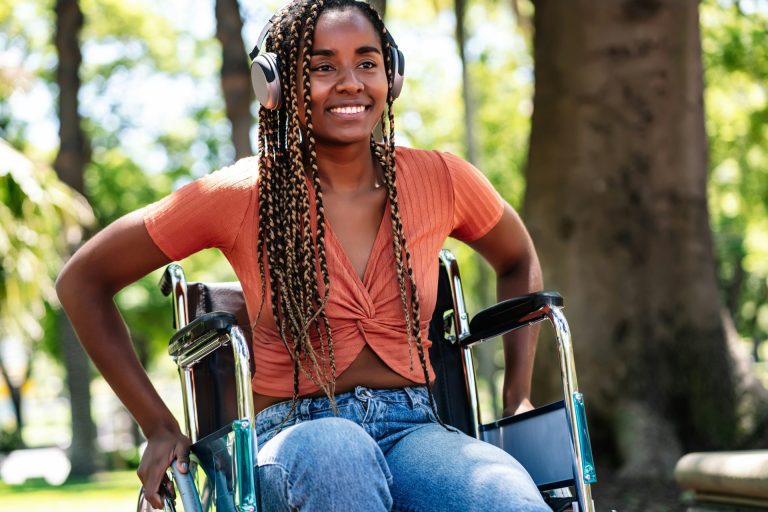
Restoring Dignity: A Win for Women with Disabilities in Kenya
Posted on: Thu, Apr 17, 2025 | 2:32 pmFor years, intellectually challenged women and girls in Kenya have faced systemic discrimination, not just from society but also from the very laws meant to protect them. Until 2024, Section 146 of the Penal Code and Section 125(2) of the Evidence Act referred to intellectually challenged individuals using derogatory terms such as “idiots” and “imbeciles”.
Read More
Intellectually Challenged Women and Girls Project- Nairobi and Kiambu
Posted on: Fri, Feb 14, 2025 | 3:07 pmThe project’s overall goal is to enhance access to justice for intellectually challenged victims and survivors of Sexual and Gender Based Violence through integrated legal and psychosocial support service provision.This is achieved vide: direct legal aid and psychosocial support provision to victims and survivors of Sexual and Gender Based Violence, with a specific focus on the especially […]
Read More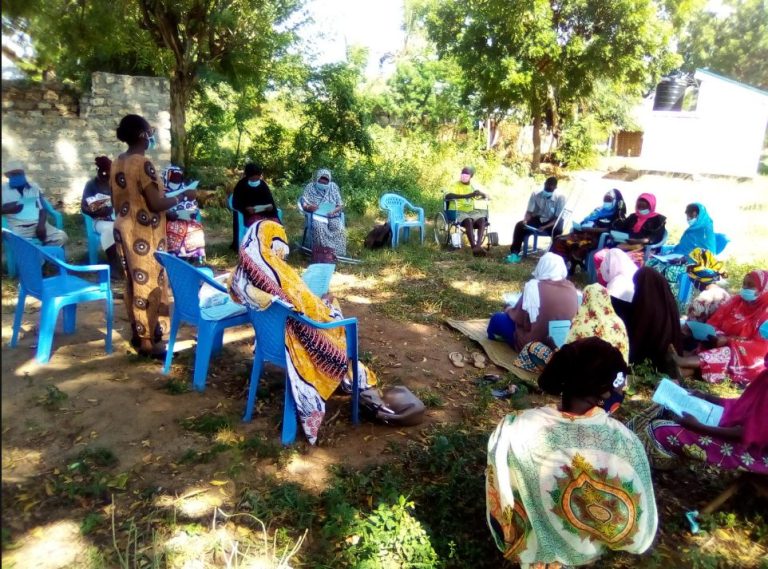
Tupo Tusikizwe: Gender-Responsive Budgeting in Kwale County, Kenya
Posted on: Fri, Jan 10, 2025 | 2:44 pmParticipatory gender-responsive budgeting and community scorecards provide women, including those with disabilities, platforms to present their collective interests to policymakers, influence more inclusive budgetary allocation and improve service delivery in Kwale County, Kenya.
Read More
Highlights From the Fourth Quarter
Posted on: Tue, Dec 24, 2024 | 12:18 amAs we reflect on this past quarter, we are grateful for your unwavering dedication and commitment to COVAW’s mission. Together, we have witnessed remarkable growth this year, with transformative progress in our projects across multiple counties.
Read More
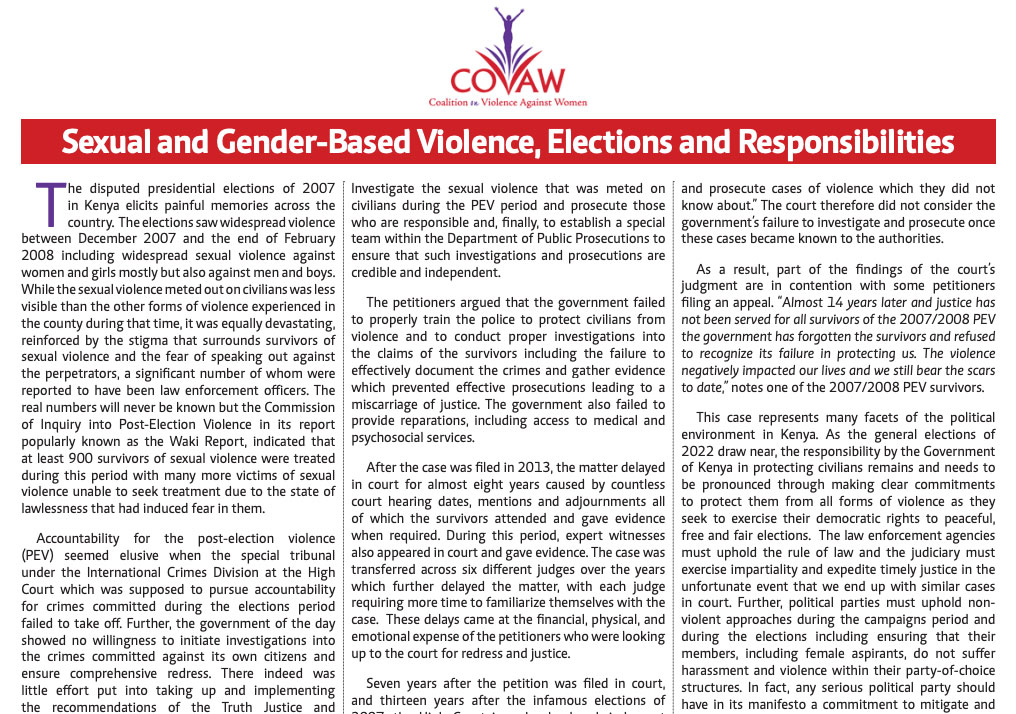
Sexual and Gender-Based Violence, Elections and Responsibilities
Posted on: Sun, Jul 21, 2024 | 12:27 pmRead More
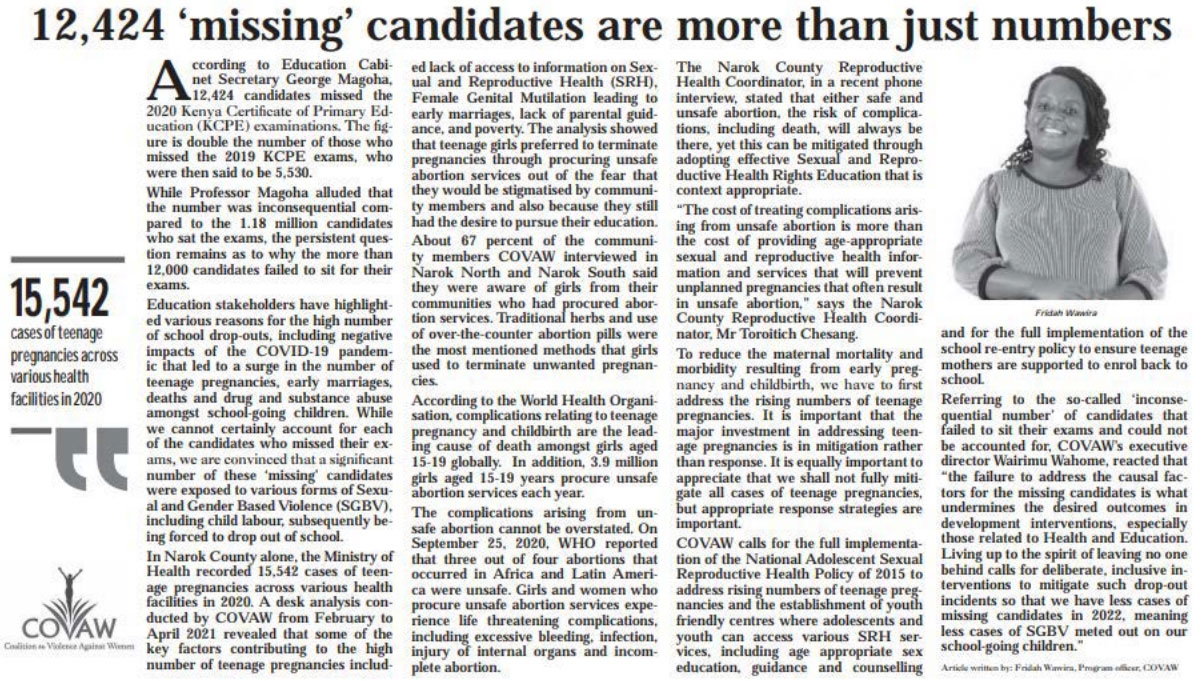
12,424 ‘missing’ candidates are more than just numbers
Posted on: Sat, Jul 20, 2024 | 12:32 pmRead More
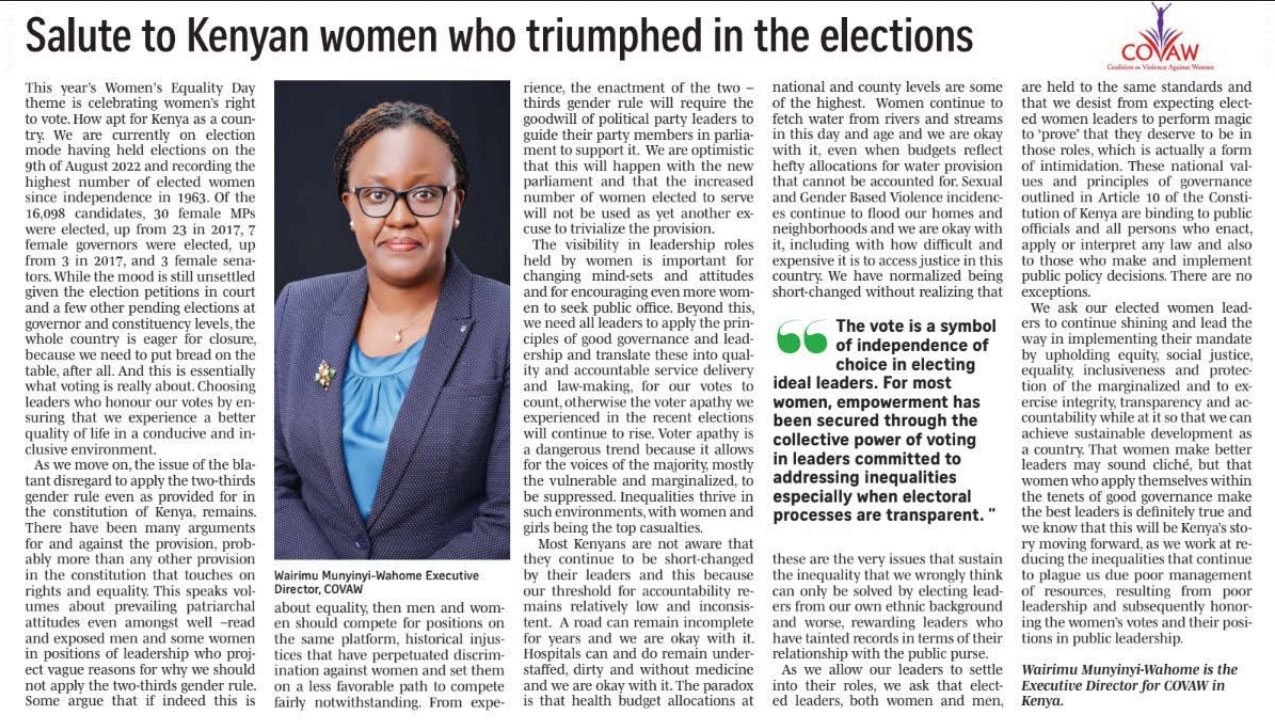
Salute to Kenyan women who triumphed in the elections
Posted on: Fri, Jul 19, 2024 | 12:35 pmRead More